


Migration is changing the way countries define their borders, manage their populations and cooperate with their neighbours. From Europe’s new asylum framework to labour mobility across Africa, governments are under pressure to control irregular migration while responding to workforce shortages, humanitarian emergencies and growing economic interdependence.
The scale of international migration is substantial. According to the International Organization for Migration’s World Migration Report 2026, approximately 304 million people were living outside their country of birth by mid-2024, equivalent to around 3.7% of the world’s population.
Forced displacement presents a separate challenge. The United Nations refugee agency reported that 117.8 million people worldwide were forcibly displaced at the end of 2025 because of persecution, conflict, violence, human rights violations and other serious disturbances to public order.
These figures measure different populations and should not be combined. International migrants move for a range of reasons, including employment and family reunification, while forced displacement involves people compelled to leave their homes. Some international migrants are refugees, but the categories are not interchangeable.
Together, these movements are influencing immigration laws, border enforcement, public spending and diplomatic relations.
More Read

Europe changes its approach to asylum
Europe illustrates how migration is driving major changes in government policy.
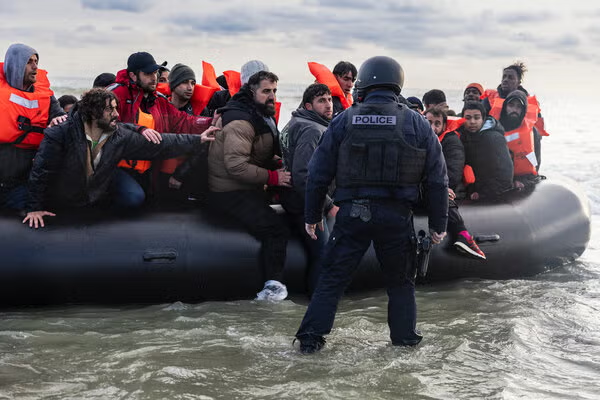
On June 12, 2026, the European Union’s Pact on Migration and Asylum entered into application, establishing a common framework for screening arrivals, processing asylum claims, determining responsibility for applications and supporting member states facing migration pressure.
The framework introduces mandatory registration and screening procedures for irregular arrivals, alongside revised asylum and return processes. It also establishes a solidarity mechanism intended to help distribute responsibility among EU countries.
The reforms reflect longstanding disagreements over how European governments should share the costs and responsibilities associated with migration.
Countries at the EU’s external borders can face immediate pressure to register arrivals and provide accommodation, while other member states may receive asylum applicants moving within Europe. The new system is intended to improve coordination and establish more consistent procedures across the bloc.
However, implementation remains a major test. Faster processing does not automatically guarantee fair decisions, adequate reception facilities or effective access to legal protection. Governments must also ensure that people entitled to asylum can access the procedures and safeguards required by law.
The EU’s experience demonstrates a wider challenge facing destination countries: border management requires more than physical barriers. It also depends on administrative capacity, cooperation between governments and clear legal procedures.
Why stronger borders do not necessarily stop migration
Governments frequently introduce stricter visa requirements, border checks, detention procedures and return policies to discourage irregular migration.
Such measures can affect the number of people using particular routes. However, they do not necessarily eliminate the economic, political and social pressures that encourage people to move.
The IOM’s 2026 World Migration Report highlights how restrictions on regular migration pathways can redirect movement towards irregular and more dangerous routes.
When legal opportunities are limited, some people may turn to smugglers or undertake longer journeys through transit countries. Routes can change as governments introduce new restrictions, security cooperation develops or conflicts disrupt established travel patterns.
This does not mean that all border controls are ineffective. Governments have legitimate responsibilities to manage entry, identify security risks and enforce immigration laws. The central question is whether policies achieve their stated objectives without creating avoidable humanitarian costs or simply transferring pressure to neighbouring countries.
A sustainable approach requires reliable migration data, effective law enforcement, accessible legal pathways and cooperation across countries of origin, transit and destination.
Africa’s borders face a different set of pressures
In Africa, migration is closely connected to regional trade, employment, education, family networks and displacement caused by conflict.
International attention often focuses on Africans attempting to reach Europe. Yet migration within Africa is also significant, with people moving between neighbouring countries in search of work, business opportunities, education and safety.
Regional mobility can support economic integration by connecting employers with workers and enabling businesses to reach new markets. It can also help households diversify their incomes and maintain commercial links across borders.
At the same time, sudden displacement can place pressure on local services, particularly where host communities have limited access to housing, healthcare, education and employment.
The African Continental Free Trade Area and regional integration initiatives have increased the importance of coordinating trade and mobility policies. However, the removal of trade barriers does not automatically give every African citizen the right to live or work in every African country. Immigration and work-permit rules continue to vary by country and regional agreement.
For governments, the challenge is to facilitate lawful movement while maintaining effective border administration and ensuring that migration arrangements benefit both newcomers and host communities.
Rwanda and East Africa: mobility, skills and regional integration
East Africa demonstrates why migration policy cannot be separated from economic development.
People move within the region for employment, business, education and family reasons. Refugees and other displaced populations also seek safety in neighbouring countries when conflict or insecurity forces them from their homes.
For Rwanda, regional mobility is relevant to trade, investment, tourism, professional services and the development of a skilled workforce. The ability of businesses to recruit qualified workers and serve customers across borders can support economic integration, particularly in sectors that depend on specialised knowledge.
At the same time, governments must consider how population movements affect public services, labour-market conditions and the protection of vulnerable people.
Effective regional arrangements can help simplify legitimate travel, clarify work-permit requirements, improve recognition of professional qualifications and strengthen cooperation against trafficking and document fraud.
These objectives require coordination among national governments and regional institutions. A regional market cannot function efficiently if businesses and workers face unpredictable administrative procedures, but mobility policies must also reflect each country’s laws and institutional capacity.
Migration is also an economic calculation
The debate over migration is often framed around border security, but its economic effects are equally important.
Migrants contribute to destination economies through employment, entrepreneurship, taxation and consumer spending. They may fill vacancies in sectors where employers struggle to recruit locally, although the effects differ according to the skills involved, labour-market conditions and the availability of housing and public services.
Migration also connects economies through remittances.
The World Migration Report 2026 estimates that global remittances reached $905 billion in 2024. These transfers support households in countries of origin, helping pay for education, healthcare, housing and business activities.
For lower- and middle-income countries, remittances can provide an important source of household income and foreign currency. However, they are not a substitute for domestic job creation, sound economic management or investment in public services.
Migration can also create challenges. Countries of origin may lose experienced professionals when skilled workers leave, while destination countries may face pressure to expand infrastructure and services in rapidly growing communities.
The economic outcome therefore depends partly on how governments manage recruitment, recognise qualifications, protect workers from exploitation and create opportunities for migrants and local residents.
Conflict and climate pressures are changing displacement
Not all migration is voluntary, and not everyone who leaves home crosses an international border.
Conflict and persecution remain major drivers of forced displacement. Climate-related disasters, including floods and droughts, can also undermine livelihoods and force people to move.
The distinction matters for policy. A person displaced within their own country is generally classified as an internally displaced person, while someone who crosses an international border and meets the applicable criteria may qualify for refugee protection.
Climate-related movement is more complex. Environmental pressures can contribute to displacement, but migration decisions often reflect several factors, including employment, insecurity, family circumstances and access to resources.
Many people affected by disasters remain within their own countries. Others move temporarily or relocate permanently, depending on the severity of the disruption and their available options.
Governments consequently need to integrate mobility into disaster preparedness, climate adaptation, urban planning and social protection. Countries receiving displaced populations may also need additional international support to provide services and protect vulnerable communities.
The humanitarian cost of dangerous routes
Irregular migration routes continue to expose people to serious risks, including exploitation, trafficking, abuse and death.
The Mediterranean remains a major focus of concern, while routes linking the Horn of Africa to Yemen and Gulf countries also expose migrants to dangerous conditions.
Counting deaths and disappearances is difficult. Some incidents are never witnessed or reported, and different organisations use different methods to compile their figures. Available totals should therefore be understood as documented minimum estimates rather than a complete count of every person who has died or disappeared.
The policy implications extend beyond rescue operations. Governments must investigate trafficking networks, improve access to accurate travel information, strengthen protection systems and ensure that people seeking asylum can reach fair procedures.
Expanding safe and regular migration opportunities can also help reduce dependence on dangerous routes. Such policies do not remove the need for border enforcement, but they can give people lawful alternatives to irregular journeys.
A new balance between sovereignty and cooperation
Migration is increasingly becoming a diplomatic issue as countries negotiate visa arrangements, return agreements, labour-mobility programmes and cooperation with transit states.
Destination countries may seek assistance from neighbouring governments to manage departure points and irregular crossings. Transit countries, in turn, may request financial support, investment, legal migration opportunities or assistance with receiving displaced people.
These arrangements can strengthen cooperation, but they can also create disputes over responsibility. Governments that assume greater enforcement duties may face pressure on their own resources, while inadequate safeguards can expose migrants to arbitrary detention, mistreatment or unsafe returns.
Effective agreements require clear responsibilities, transparent oversight, sufficient resources and respect for applicable refugee and human rights law.
No single country can manage every stage of a migration route on its own. But cooperation will be sustainable only when its costs and responsibilities are addressed fairly.
What comes next?
Migration will remain a central policy issue as governments respond to demographic change, labour shortages, conflict, economic inequality and environmental pressures.
The most effective policies will need to distinguish between different forms of movement rather than treating every migrant as an asylum seeker or a security threat.
Governments must be able to enforce immigration laws while protecting people who qualify for international protection. They must also respond to labour-market needs, support host communities and cooperate with countries of origin and transit.
For Africa, stronger regional coordination could make lawful mobility more predictable and help businesses access skills and markets. For Europe and other destination regions, the challenge is to ensure that stricter procedures produce effective administration without undermining legal protections.
Migration is reshaping borders, but the real test for governments is whether they can manage human mobility in ways that are secure, economically sustainable and consistent with their legal obligations.
This article uses the latest available global statistics identified from IOM and UNHCR publications and distinguishes established figures from policy analysis. Global migration estimates refer to specified reporting periods, not real-time counts.