

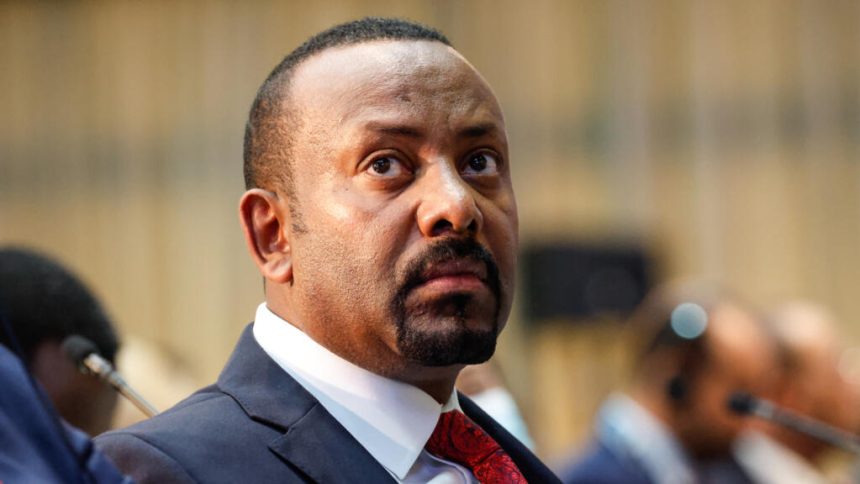
Ethiopian Prime Minister Abiy Ahmed has warned neighbouring Eritrea that it could face “very, very, very severe consequences” if it continues to support forces fighting his government, according to AFP. The warning escalates tensions between the two countries amid renewed conflict in northern Ethiopia.
In a speech delivered in Tigrinya on Monday, Abiy accused Eritrea of undermining Ethiopia’s security and urged its government to pursue cooperation rather than support forces opposed to Addis Ababa. His remarks came after weeks of heavy fighting in northern Ethiopia reignited fears of a broader confrontation in the Horn of Africa.
“Serving as a base for Ethiopia’s enemies instead of being a partner in development will not bring benefits,” Abiy said.
Eritrea denies involvement in the fighting. Its information minister told the BBC before ties were cut that his country was not taking part in the conflict in Tigray.
Renewed fighting in Tigray
The current crisis has built through 2026. In May, the Tigray People’s Liberation Front (TPLF) retook power in Mekelle, dismantled the interim administration, reinstalled its leader Debretsion as regional president and placed the interim leader under house arrest, according to the International Crisis Group. Clashes with federal forces followed, culminating in some of the heaviest fighting in northern Ethiopia since the 2020–2022 war.
More Read

In recent weeks the fighting has shifted in favour of federal forces and their allies. They took Mekelle on 3 October, reportedly without a fight, and the TPLF withdrew from the regional capital the following day. Federal forces have since advanced north of the city.
The fighting has raised concerns that the conflict could extend beyond Ethiopia’s internal political and security disputes. Ethiopia accuses Eritrea of arming and backing the TPLF and of contributing to the renewed hostilities, and there have been reports of alleged Eritrean deployments in northern Tigray. Eritrea rejects these accusations. The two governments have also exchanged accusations at the United Nations. The extent of Eritrea’s military role remains the central point of dispute between the two governments.
New administration appointed in Tigray
As federal forces consolidate their position, Ethiopia’s government has appointed a new caretaker administration for Tigray. Officials say their immediate priority is to restore stability and prepare the region for elections.
The newly appointed mayor of Mekelle, Shishay Amare, told Agence France-Presse on Monday that regional elections would be organised within six months.
“Our role is to create the right conditions for elections by ensuring peace and stability across Tigray,” Amare said.
The proposed timetable would mark a significant political change in a region where the TPLF exercised considerable authority for decades and played a dominant role in national politics before Abiy became prime minister in 2018.
Abiy also called on Tigray’s population to preserve unity and maintain regional institutions until a regular administration can be established through elections.
“The TPLF did not exist 50 years ago, and now its existence is coming to an end,” he said, in remarks reflecting the federal government’s position on the group’s political future.
The TPLF’s withdrawal from Mekelle does not by itself mean the conflict is over. Fighting has also been reported in Amhara and Afar, and the TPLF has not conceded.
A troubled history between Ethiopia and Eritrea
Eritrea won de facto independence from Ethiopia in 1991 after a prolonged armed struggle, and was formally recognised as independent in 1993. The countries fought a devastating border war between 1998 and 2000, leaving relations deeply strained for years.
Ties improved after Abiy took office in 2018 and pursued reconciliation with Eritrean President Isaias Afwerki. The rapprochement earned Abiy the Nobel Peace Prize in 2019.
The two countries later fought on the same side in Ethiopia’s 2020–2022 war against the TPLF. Eritrea was not a signatory to the 2022 Pretoria Agreement that ended it, and the alliance has since deteriorated. Earlier this year Abiy publicly accused Eritrean troops of atrocities during that war.
The break came on 1 October 2026. Ethiopia closed its embassy in Asmara, citing Eritrea’s “direct and indirect acts of hostility and belligerence,” and ordered 10 Eritrean diplomats to leave within 48 hours. Eritrea responded the same day by severing all diplomatic ties, saying it had “no option but to reciprocate in kind.”
The deterioration has heightened fears that a domestic conflict in Ethiopia could develop into a confrontation between two neighbouring states with a history of war.
Red Sea access adds another layer of tension
Beyond the immediate conflict in Tigray, the dispute is linked to Ethiopia’s strategic interest in securing reliable access to the Red Sea.
Ethiopia became landlocked after Eritrea’s independence. With a large population and extensive trade interests, Addis Ababa argues that access to maritime routes is essential to its long-term economic and security interests. Eritrea, which controls a stretch of the Red Sea coastline, accuses Abiy’s government of harbouring ambitions over its ports, and the prospect of Ethiopia pursuing access in ways that threaten Eritrean sovereignty has fuelled regional anxiety.
In his Monday speech, Abiy referred to the economic decline of Eritrean cities and argued that cooperation would offer a better path forward.
“When Eritrea was part of Ethiopia, its cities were vibrant and beautiful. Today, Eritrean cities seem like ghost towns,” he said.
He added that “good neighbourly relations and partnership are the only way forward.”
His remarks combined a warning over Eritrea’s alleged support for Ethiopian opponents with an appeal for better relations. They did not clarify what measures Ethiopia might take if tensions continue.
Regional implications and risks to civilians
The crisis extends beyond the two countries. Ethiopia has also accused Egypt, and Sudan, of backing Tigrayan rebel forces, and Ethiopia and Egypt have exchanged diplomatic expulsions, adding to unresolved tensions over the Grand Ethiopian Renaissance Dam. A sustained confrontation could place further pressure on a fragile Horn of Africa, where political rivalries, territorial disputes and competing strategic interests intersect.
The renewed conflict also threatens communities in Tigray that have endured years of insecurity. The 2020–2022 war caused enormous civilian suffering, displacement and damage to essential services, and renewed fighting risks reversing efforts to restore livelihoods and rebuild institutions.
International concern has grown. The African Union Commission has urged Ethiopia, Eritrea and Egypt to exercise “maximum restraint,” and the United States has called for de-escalation and respect for sovereignty and territorial integrity. Humanitarian organisations have raised concerns about civilian casualties and interruptions to essential services.
How far the hostilities will spread remains uncertain. Much will depend on whether the governments can prevent further cross-border incidents, reopen diplomatic channels and address their competing security concerns. For now, Abiy’s warning signals that Ethiopia regards alleged Eritrean support for anti-government forces as a major security issue, and the region will be watching whether it leads to renewed engagement or further confrontation.