



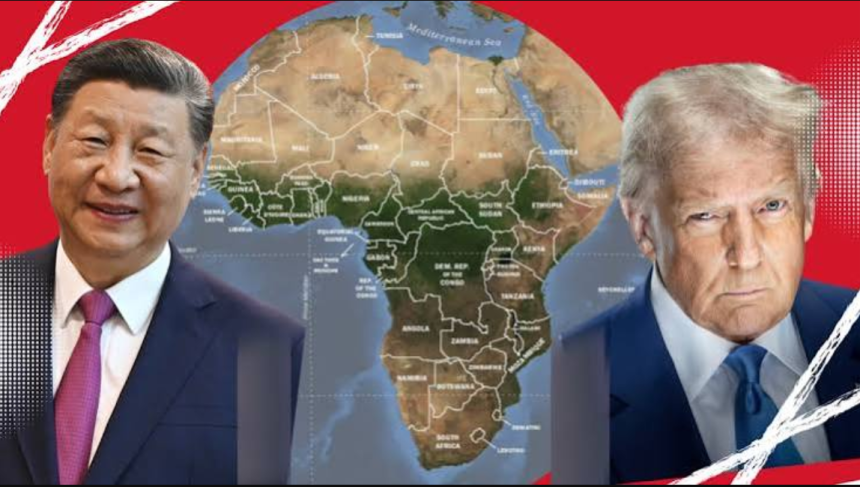
Trade wars are about more than tariffs. They affect consumer prices, business investment, employment and international relations. When governments tax imports to protect domestic industries or gain negotiating leverage, trading partners may retaliate, increasing costs across global supply chains.
The US–China trade dispute demonstrates how economic competition between major powers can affect countries far beyond their borders. For Africa, the challenge is to manage the risks while using changing trade patterns to strengthen domestic production and regional markets.
1. Trade Wars: Lessons from History
Trade protectionism has shaped the global economy for centuries. One notable example is the United States’ Smoot–Hawley Tariff Act of 1930, which raised import duties during the Great Depression and prompted retaliation from trading partners.
Between 1929 and 1934, world trade fell by approximately 66%. The Great Depression had multiple causes, so tariffs alone cannot explain the collapse. Nevertheless, the period illustrates how protectionism can deepen economic difficulties when countries respond to one another with escalating restrictions.
Today’s trade conflicts involve additional strategic concerns, including semiconductors, critical minerals, advanced technology and industrial subsidies. The historical lesson remains relevant: retaliation can spread economic costs well beyond the countries initiating a dispute.
More Read

2. The US–China Trade War: From Tariffs to Technology
The current US–China trade conflict escalated in 2018 when Washington imposed tariffs on a wide range of Chinese imports. The dispute involved trade imbalances, intellectual property, technology transfer, industrial subsidies and market access. China retaliated, including with tariffs on American agricultural products.
Although negotiations produced temporary agreements, many trade restrictions remained. In 2025, the confrontation intensified sharply before the two governments stepped back from the most extreme measures. Disagreements over technology, strategic supply chains and market access continued into 2026.
The scale of the relationship illustrates the stakes. US trade in goods with China reached approximately $414.7 billion in 2025, including around $106.3 billion in US exports and $308.4 billion in imports. The US goods trade deficit was approximately $202.1 billion.
These figures concern goods rather than total trade, which also includes services. They nevertheless demonstrate how disruption between two major economies can affect businesses and markets worldwide.
3. Who Pays for Tariffs?
Tariffs are taxes on imported goods, generally collected from importers rather than directly from foreign governments.
Businesses may absorb the additional cost, negotiate lower supplier prices, find alternative suppliers or increase prices for customers. The eventual burden depends on competition, exchange rates, available alternatives and the bargaining power of buyers and sellers.
Higher input costs can reduce company profits, discourage investment and increase consumer prices. Smaller businesses are often more vulnerable because they have fewer financial reserves and less negotiating power.
Tariffs can protect selected industries, but their benefits must be weighed against the costs imposed on consumers, exporters and manufacturers that depend on imported materials.
4. Winners and Losers in Global Trade
Some domestic producers benefit when tariffs make competing imports more expensive. Businesses in third countries may also gain new customers when buyers seek alternative suppliers.
Brazil, for example, has benefited from China’s demand for soybeans during periods of trade friction between Washington and Beijing.
However, diverted trade does not guarantee lasting development. Countries need competitive production, reliable infrastructure, skilled workers and access to finance to turn temporary orders into sustainable industries.
Meanwhile, import-dependent businesses may face higher costs, exporters can lose markets to retaliation, and companies may delay investment because future trade rules are uncertain.
The outcome is rarely a simple contest with one winner. Benefits often concentrate in particular industries, while costs spread across businesses and households.
5. What the Trade War Means for Africa
Africa’s exposure varies by country and industry. Economies dependent on particular agricultural exports, manufactured goods or preferential access to the US market may face different risks from countries exporting mainly minerals or energy.
The International Monetary Fund reported that the effective US tariff rate on sub-Saharan African exports rose from near zero at the end of 2024 to more than 12% in October 2025, before falling to 8.5% by late February 2026.
The IMF also found that aggregate exports from sub-Saharan Africa to the United States remained broadly unchanged during the two quarters following the April 2025 tariff announcement. This regional result does not mean every country or sector escaped disruption.
For example, South Africa’s automotive exports to the United States fell substantially, while increased exports to other markets helped offset the decline. The experience illustrates why diversification can be important when trade conditions change.
Africa must protect existing export opportunities while building the capacity to produce more competitive goods and services.
6. South Africa and the Importance of Market Access
The African Growth and Opportunity Act (AGOA) has provided eligible sub-Saharan African countries with preferential access to the US market for qualifying products. Such arrangements can support exporters, jobs and investment, but uncertainty over eligibility and future access can disrupt business planning.
South Africa’s experience highlights the risks of relying heavily on a particular trading relationship. Exploring markets in China, India and elsewhere can reduce dependence on the United States, although new markets require investment, distribution networks and compliance with different standards.
Preferential access is valuable, but long-term resilience requires multiple viable export markets and stronger domestic production.
7. China and Africa: Opportunity and Competition
China is a major trading partner for African countries, exporting machinery, electronics and consumer goods while importing oil, minerals, agricultural products and other commodities.
According to Chinese official figures, China–Africa trade reached a record $348 billion in 2025. Chinese exports to Africa were approximately $225 billion, compared with imports from Africa of around $123 billion.
This merchandise-trade imbalance highlights an important challenge: many African economies continue to sell raw materials while purchasing higher-value finished products. However, trade figures alone do not capture the full relationship, which also includes investment, services and infrastructure financing.
Chinese demand and investment can support African development. Imported equipment can improve productive capacity, and investment can create jobs and transfer skills. At the same time, local manufacturers may struggle to compete with large foreign producers when electricity is unreliable, finance is expensive or logistics are inefficient.
China’s expansion of zero-tariff treatment for eligible African exports in 2026 could create additional opportunities. Yet tariff-free access does not guarantee sales: exporters still need competitive products, reliable supply, appropriate standards and buyers.
The strategic challenge is to turn market access into greater local processing, manufacturing and employment.
8. Can Trade Wars Accelerate African Industrialisation?
Global supply-chain disruption may encourage companies to diversify manufacturing locations. African countries could attract investment, but only if they offer competitive costs, reliable infrastructure, skilled workers and efficient trade procedures.
The African Continental Free Trade Area (AfCFTA) offers a potential advantage by expanding access to regional markets. A World Bank analysis estimated that full implementation could increase African incomes by 7%, or approximately $450 billion, by 2035, compared with its baseline scenario. This is a projection, not a guaranteed outcome.
Regional integration could help manufacturers achieve economies of scale, source inputs from neighbouring countries and sell finished products across Africa. Opportunities exist in food processing, textiles, pharmaceuticals, mineral processing and industrial components.
Realising these gains requires better transport, reliable electricity, simpler customs procedures, access to finance and consistent standards. Trade agreements alone cannot create competitive industries without investment and effective implementation.
9. What African Governments and Businesses Should Do
Africa can reduce its vulnerability to global trade tensions through five practical measures:
Diversify export markets. Expand commercial relationships across Africa, Asia, Europe, the Middle East and the Americas to reduce dependence on individual markets.
Increase value-added production. Invest in processing, manufacturing, workforce skills and technology rather than relying exclusively on raw commodity exports.
Make regional trade easier. Implement AfCFTA commitments, reduce border delays, simplify documentation and improve transport connections.
Support small businesses. Improve access to trade finance, export information, certification and international buyers so that smaller firms can benefit from new opportunities.
Strengthen supply chains and negotiations. Identify alternative suppliers, assess trade risks and coordinate regional priorities to improve bargaining power.
Success should be measured through lower trade costs, more diversified exports, increased local processing and greater participation by African businesses in regional and international markets.
Conclusion: Africa Must Build Its Own Economic Strength
Trade wars can protect some industries while increasing costs for consumers, importers and exporters. Third-country suppliers may benefit from diverted trade, but these gains can disappear when political agreements change.
For Africa, the opportunity is not to replace dependence on one major power with dependence on another. It is to build greater economic choice.
The scale of China–Africa trade, the changing US tariff environment and the potential gains from African regional integration all demonstrate the importance of stronger productive capacity and diversified markets.
Africa’s long-term success will depend not on choosing sides in global trade wars, but on building economies capable of producing, innovating, negotiating and competing.