

Few capitals in Africa are tied to Brussels as tightly as Kinshasa. That is what makes the latest order from the Congolese presidency so striking.
In a circular dated 15 October and signed by chief of staff Anthony Nkinzo Kamole, President Félix Tshisekedi’s office told its members to avoid any direct or indirect contact with Belgian diplomats and embassy staff until further notice. The document became public on Friday 16 October. It landed within days of an event that Kinshasa insists is unrelated: Belgian police raids on properties linked to the president’s relatives.
An order with a narrow reach
This is not a diplomatic rupture, and the details matter. The embassy has not been ordered to close, and the restriction does not apply across the Congolese government. It covers people working in the president’s office in the course of their duties. The circular names deputy chiefs of staff, special advisers, coordinators of specialised services, and officials in the president’s private office.
Contact is not banned outright. If dealing with Belgian officials becomes necessary, it must be authorised and routed through the Foreign Ministry. Staff who break the rule face administrative and disciplinary sanctions.
Two versions of the story
The circular offers no explanation, so the explaining has been left to others. A presidency official, speaking anonymously to the Congolese Press Agency (ACP), described the measure as internal organisation, meant to prevent uncoordinated approaches to the embassy. A source close to the presidency went further, saying the order has nothing to do with the searches targeting the Tshisekedi family in Belgium.
More Read

The timing makes that hard to take at face value, and most outlets have reported the two events together. Africa Briefing put the unanswered question simply: why single out Belgium, when the circular neither says nor links the order to the previous day’s searches?
What the Belgian police were looking for
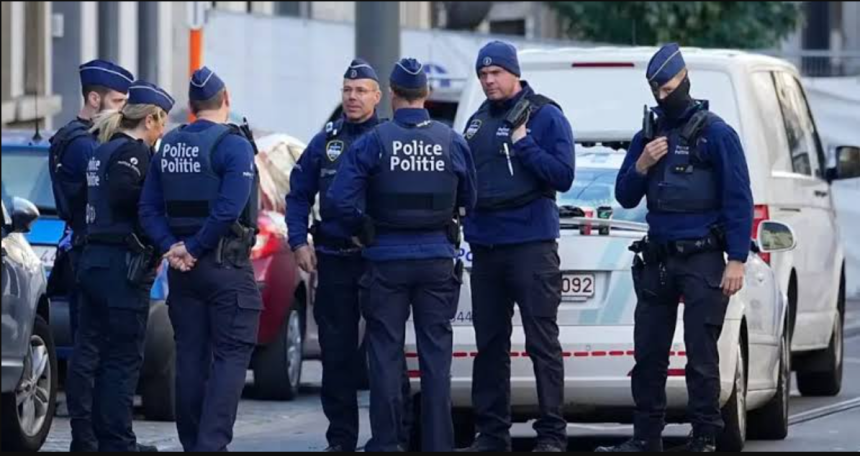
The raids took place on 14 October. Investigators visited the Belgian homes of several of Tshisekedi’s relatives as part of a money-laundering inquiry. Belgian broadcaster RTBF reported searches in Uccle, Waterloo and Leuven, and other addresses in Flemish Brabant and Walloon Brabant were also searched.
At the centre of the case is Congo’s mining wealth. The inquiry grew out of a complaint filed by NGOs from Katanga, the copper- and cobalt-rich region of southeastern Congo. The complainants, who include unions, allege corruption, embezzlement and money laundering. They accuse nine people linked to the president’s family. Their lawyers allege that money from Congolese mining revenues was diverted and laundered through Belgium.
None of these allegations has been proven, and the line between suspicion and guilt matters here. One report notes there is no evidence implicating the president himself. A police search is a step in an investigation, not proof of a crime. Lawyer Hervé Diakiese, who represents some of the complainants, made the same point: the searches, he said, show the seriousness of the complaint, but nobody’s guilt is under discussion yet.
The family rejects the accusations. Relatives of the president have previously denied them. First Lady Denise Nyakeru Tshisekedi, in a statement circulated through her lawyers, disputed claims concerning herself and her relatives and said she was willing to cooperate with Belgian investigators.
Brussels: “no situation justifies” it
Belgium did not hide its displeasure. Foreign Minister Maxime Prévot said no situation justifies banning contact with the embassy, that Belgium has no choice but to take note, and that it deplores the decision deeply. He said he learned of it with surprise.
His tone was nonetheless careful, with the door left open. He said other diplomatic channels remain active and that Brussels wants to preserve its relationship with the DRC. He told RTBF he hopes the restriction will be “extremely temporary.” Neither government has formally commented on the searches themselves.
Sovereignty as political theatre?
For some observers, the embassy order is as much about domestic politics as diplomacy. The newsletter Congo Confidentiel argued that the restriction gives Tshisekedi an immediate political advantage by letting him strike a sovereigntist pose before part of Congolese opinion. It framed the decisive question as whether he will prolong the standoff and bear the diplomatic cost, or allow a normalisation that requires no concession from Belgian justice.
That is one reading, not an established fact. The presidency says the order is about internal coordination, and it has not said otherwise.
Why Belgium is different
Congo can quarrel with many countries. Few relationships carry the weight of this one. Belgium ruled the territory from 1908 until independence on 30 June 1960, after an earlier era under King Leopold II’s personal rule. Today the ties are commercial as well as historical. Belgium is a significant destination for Congolese diaspora investment and a key European hub for trade linked to Central African minerals.
The personal links run just as deep. Reports say Tshisekedi and his wife rent a home in Brussels’ Uccle neighbourhood and that their five children are reportedly enrolled in schools in Belgium.
Regional politics also colour the moment. Africa Briefing noted that Belgium announced on 22 September that it had restored diplomatic relations with Rwanda, even as tension over the war in eastern Congo persists, and that Prévot said Belgium would keep defending DR Congo’s sovereignty and territorial integrity. The outlet stressed that this is background, not proof of a motive for the embassy restriction.
Where things stand
As of Tuesday, there is no report that the order has been lifted or widened, and no announcement of a wider rupture. Presidential staff are bound by the instruction. The Belgian investigation continues, with no charges announced in the reports reviewed. Brussels says its channels stay open and hopes the freeze is short.
What happens next depends on three things: whether Kinshasa eases the rule, whether Brussels presses for a formal explanation, and what Belgian prosecutors do with the case. The diplomatic dispute and the criminal inquiry are separate questions. How they unfold may decide whether this episode is remembered as a brief chill or as a lasting break.